Learning Outcomes:
i. Define and differentiate between various modes of animal locomotion, including walking, running, jumping, flying, swimming, and gliding.
ii. Explain the relationship between locomotion and skeletal structure in animals.
iii. Discuss the role of sensory organs and the nervous system in animal behavior.
iv. Identify and describe various adaptive behaviors exhibited by animals in different environments.
i. Animal Locomotion:
Animal locomotion is the movement of animals from one place to another. It is an essential activity for survival, allowing animals to find food, mates, and escape predators. Locomotion is achieved through a variety of mechanisms, including:
Walking: Moving one limb at a time, with the opposite limb on the same side of the body moving simultaneously.
Running: Moving two or more limbs on the same side of the body together, creating a bouncing gait.
Jumping: Launching the body into the air using the legs, often to cover short distances or to escape predators.
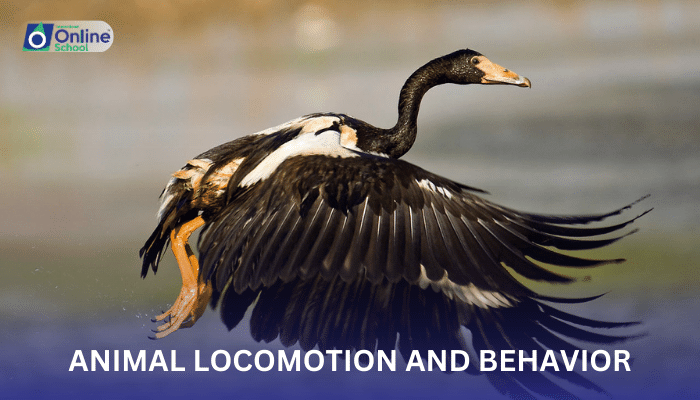
Flying: Generating lift using wings or other modified appendages to move through the air.
Swimming: Propelling the body through water using fins, paddles, or other specialized structures.
Gliding: Maintaining lift without generating propulsion, often using large, flat surfaces like wings or membranes.
ii. Relationship between Locomotion and Skeletal Structure:
The skeletal structure of an animal plays a crucial role in determining its mode of locomotion. For instance, the strong bones and flexible joints of vertebrates enable them to walk, run, and jump effectively. The lightweight bones and streamlined bodies of birds and insects make them well-adapted for flight. The streamlined bodies and fins of fish allow them to swim efficiently through water.
iii. Sensory Organs, Nervous System, and Animal Behavior:
Sensory organs, such as eyes, ears, noses, and taste buds, provide animals with information about their environment. This information is relayed to the nervous system, which processes and interprets the information, generating appropriate responses. Animal behavior encompasses a wide range of actions and responses exhibited by animals in their environment. These behaviors are influenced by both internal factors (such as hormones and instincts) and external factors (such as food availability, predators, and social interactions).
iv. Adaptive Behaviors in Animals:
Animals exhibit a variety of adaptive behaviors in response to their environments. Some examples include:
Camouflage: Blending into the environment to avoid detection by predators or prey. Examples include chameleons, butterflies, and moths.
Mimicry: Imitating the appearance or behavior of another organism to gain an advantage. Examples include the orchid mantis, which resembles an orchid flower to attract pollinators, and the hoverfly, which mimics the appearance of bees to avoid being eaten by predators.
Migration: Moving long distances seasonally in search of food, mates, or favorable environmental conditions. Examples include birds, butterflies, and whales.
Hibernation: Entering a state of dormancy during periods of food scarcity or cold temperatures to conserve energy. Examples include bears, bats, and some reptiles.
Estivation: Entering a state of dormancy during periods of hot, dry weather to conserve water. Examples include snails, worms, and some insects.
Animal locomotion and behavior are fascinating and complex aspects of animal biology. They reflect the remarkable adaptations that animals have made to their environments, allowing them to survive and thrive in a wide range of conditions. Understanding animal locomotion and behavior is essential for appreciating the diversity and wonder of the natural world.
